
The Amalgamated Ronin's Path
Charting a Path of Self-Sovereignty by Aligning Taoist Flow with Voluntaryist Principle

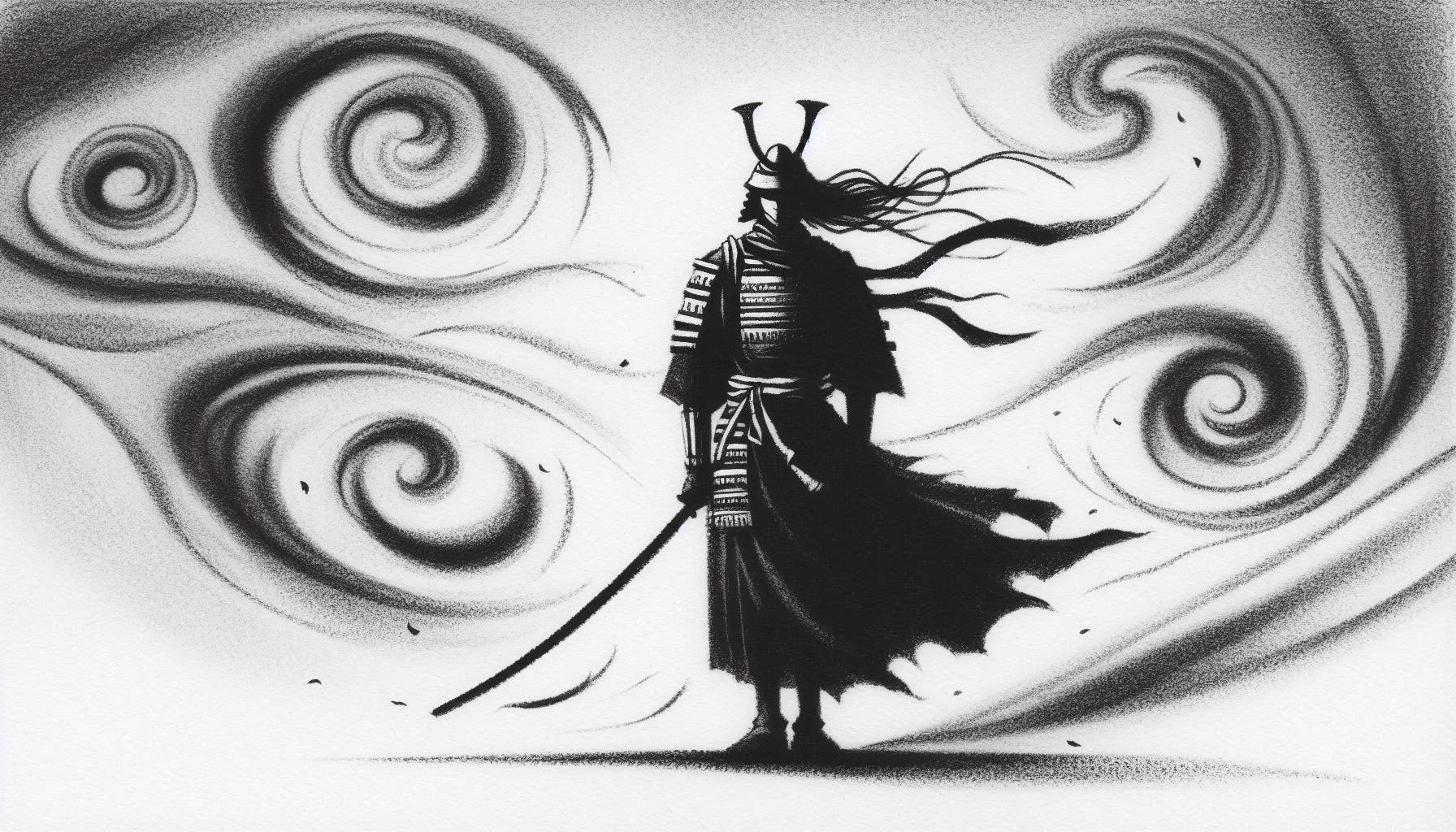
Amalgamated Ronin: “amalgamate” | verb | past tense: amalgamated; past participle: amalgamated | “combine or unite to form one organization or structure.” “ronin” | noun (historical) | (in feudal Japan) “a wandering samurai who had no lord or master.” (Credit: Oxford Languages)
Old Currents, Radical Freedom
My worldview took shape under the raw light of the Southern African sun. A continent detached from my heritage, where borders never quite line up with lived reality, and identities blend whether you want them to or not. Irish and European by ancestry, African and Colonial by imprint, I grew up watching authority fail in every direction. States claiming virtue while imposing control, ideologies collapsing under their own weight, and ordinary people surviving in spite of this modern hierarchy and not because of it.
Out of that came a philosophy I didn’t borrow so much as uncover. A mix of Taoist natural freedom and voluntaryist self-ownership. It’s the stance of an amalgamated ronin. Masterless. Self-guided. Beholden only to what feels true and what works.
At the foundation of this path sit two figures who never met, lived continents and millennia apart, and yet orbit the same truth from opposite angles. Lao Tzu, the quiet sage of the Tao, and Murray Rothbard, the architect of modern voluntaryism. One wrote in verse. The other wrote in economic treatises. Both wrestled with the same problem. How does a person stay free in a world obsessed with control?
This path is the meeting point between them.
“Amalgamated,” in the metaphorical sense, evokes the deliberate fusion of distinct metals into a single, stronger alloy. Elements that retain traces of their origins yet emerge transformed, more resilient and versatile than any one alone. It speaks to a worldview consciously forged from disparate sources.
Ideas, cultures, experiences, and philosophies melted together through lived reflection rather than passive inheritance. Nothing is merely borrowed. Everything is potentially recast. Impurities burned away. Yielding a unique compound that belongs wholly to the individual who performed the alchemy.
“Ronin” originates from feudal Japan. It literally means “wave-man”. A samurai who, through the death of his lord, dishonor, or deliberate choice, has become masterless and drifts unbound by oath or domain. Far from a tragic outcast, the true ronin embodies radical sovereignty. He owes fealty to no daimyo, no shogun, no emperor. He owes fealty only to his own code and the open road.
In the broader philosophical sense adopted here, ronin represents the archetype of the sovereign wanderer who refuses permanent allegiance to any external authority, cooperating only by explicit, revocable consent.
When fused as “amalgamated ronin,” the phrase captures a self-forged, masterless individual whose entire intellectual and existential framework is a deliberate synthesis of otherwise separate traditions. It is not eclectic dilettantism. It is a rigorous, personal metallurgy. The individual has taken raw philosophical ores from East and West, subjected them to the fire of lived experience, and emerged with a blade uniquely his own. No lineage. No school. No master. Yet enriched by the tempered strength of both hemispheres.
The “amalgamated” half draws its essence from Western voluntaryism and radical libertarianism. A lineage running through Lysander Spooner’s demolition of implied consent, Auberon Herbert’s voluntary state, Benjamin Tucker’s egoist mutualism, and culminating in Murray Rothbard’s anarcho-capitalism. Rothbard did not merely add ideas side-by-side. He amalgamated them. Superseding and refining predecessors until a new, more consistent alloy emerged.
The “ronin” half is rooted in Eastern Taoism, epitomized by Lao Tzu himself. Who, according to legend, resigned his court post, rode westward on a water buffalo, and vanished rather than remain within any system. Together, “amalgamated ronin” becomes the living embodiment of a philosophy that is both rigorously consent-based (voluntaryist) and effortlessly non-coercive (Taoist). Owned by no concept yet enriched by both.
In the rhythmic pulse of Dual Supersession, the amalgamated ronin lives as the eternal hinge between past and present, East and West, tradition and innovation. A ceaseless, reciprocal dance in which each pole alternately overtakes, refines, and is overtaken by the other in endless mutual elevation.
Here, “amalgamated” embodies the molten, hyper-connected present where disparate ideas, cultures, and technologies fuse into ever-new alloys of possibility. Meanwhile, “ronin” carries the ancient, masterless spirit of timeless tradition. The unyielding sovereignty forged in Lao Tzu’s wilderness exile and feudal Japan’s open road.
Western voluntaryism periodically supersedes Taoism by supplying explicit ethical scaffolding (the non-aggression principle, self-ownership, contractual rigor). This turns the Tao’s intuitive wu wei into a defensible, consent-based social order. Then, Taoism supersedes voluntaryism in return, softening its occasional rigidity with effortless non-action, while reminding the libertarian that true defense often lies in yielding. That markets and contracts flow most powerfully when least forced.
Voluntaryism reasserts itself by anchoring Taoist detachment in individual rights and prevents quietism from sliding into passivity or collectivist haze. The rhythm never stops. Past yields to present and present bows to past. West sharpens East while East fluidizes West.
Each cycle leaves the amalgamated ronin more refined. More sovereign. More attuned to the spontaneous order that arises when force is abandoned, yet principle is never compromised. Until their ceaseless interplay forges a sovereign future that belongs to no single era or tradition, yet honours both in a freedom that is simultaneously fierce and serene.
Forged in the West
“Libertarianism holds that the only proper role of violence is to defend person and property against violence, that any use of violence that goes beyond such just defense is itself aggressive, unjust, and criminal.”
- Murray N. Rothbard, For a New Liberty (1973)
Libertarianism
Libertarianism starts with a simple premise: your life is yours. Everything else branches out from that. It treats individual freedom as the default state of a human being and treats political authority as something that must justify its existence. Not as something we are automatically expected to submit to. The core idea is that peaceful individuals should be left alone to live, trade, move, speak, associate, and create without external control.
What sets libertarianism apart from other political traditions is that it doesn’t try to engineer society from above. It flips the entire mindset of centralized rule. Instead of asking, “What should the state do?” Libertarianism asks, “Why should the state do anything it has no right to do?” Most problems associated with monopoly governance, such as war, corruption, surveillance, and overregulation, are seen as predictable outcomes of giving any institution a monopoly on coercive power.
So libertarianism becomes a kind of political minimalism. Keep force out of peaceful life. Let people figure out the rest through cooperation, trade, community, and choice.
Voluntaryism
Voluntaryism is the sharpened, uncompromising core of the libertarian tradition. If libertarianism asks for minimal interference, voluntaryism demands zero coercion. Every relationship, be it economic, social, legal, or protective, must be based on consent. No implied authority. No “you owe us because you were born here.” No forced taxes, forced membership, or forced allegiance.
Voluntaryism treats society not as a machine controlled from the top. It treats it as a network of chosen agreements. Defense becomes a service you can subscribe to. It is not something imposed. Dispute resolution becomes competitive. Communities form organically. Like ecosystems. Naturally. Authority becomes contractual and dissolvable.
The ethical rule is straightforward:
No one may initiate force against another person or their property.
Everything else must follow from this.
Voluntaryism doesn’t offer blueprints for a perfect world. It simply insists on the same principle Lao Tzu described in ancient China. When rulers stop forcing outcomes, people build order on their own.
Murray Rothbard
Murray Rothbard is the thinker who took the scattered principles of classical liberalism, natural rights theory, Austrian economics, and anti-authoritarian ethics, and fused them into a coherent system. He didn’t just critique the state. He dissected it. He showed how coercive power distorts everything it touches.
Murray Rothbard argued that self-ownership is the starting point for ethics. From that, he derived private property, voluntary exchange, and the non-aggression principle. With these, he built a full critique of monopoly governance. He challenged the idea that society needs centralized rulers and instead imagined a world where law, security, and arbitration arise through voluntary networks.
He restored older radicals like Lysander Spooner, revived debates about natural law, and gave modern libertarianism its intellectual spine. If someone wants to understand voluntaryism not as a slogan but as a full worldview, Murray Rothbard is the place to start.
Man, Economy, and State (1962)
This was Rothbard’s major economic work. An attempt to rebuild economics from the ground up without the contradictions he saw in mainstream schools. Inspired by Ludwig von Mises but more systematic, the book takes human action (purposeful behaviour) as the starting point and builds an entire economic structure around it.
Key elements:
Human action is intentional and value-driven.
Prices emerge from voluntary exchanges, not from mathematical abstractions.
Production, capital, interest, and entrepreneurship all follow from real choices made by individuals.
Interventions, such as taxes, regulations, subsidies, and monopolies, distort information, waste resources, and reduce prosperity.
But what makes the book stand out is how Rothbard shows that a free economy naturally generates coordination and stability. The more coercion is added (even small nudges), the more the system breaks down. Man, Economy, and State is essentially a technical argument that voluntary order works and planned order fails.
For a New Liberty (1973)
This is Rothbard’s most accessible and sweeping work. His attempt to introduce the general reader to libertarian, voluntaryist principles. He takes every major function of the state and asks a simple question: “What would this look like if it were voluntary instead of coercive?”
The results are:
Private courts and arbitrators instead of government courts
Voluntary defense agencies instead of state militaries or police monopolies
Free movement and association instead of border controls
Mutual aid networks instead of government welfare
Contractual communities instead of political jurisdictions
The book’s strength is its tone: direct, unapologetic, and focused on real-world possibilities rather than fantasies. It’s a manifesto for those tired of being managed. Rothbard positions liberty not as chaos but as a grounded alternative to bureaucratic rule.
The Ethics of Liberty (1982)
While Man, Economy, and State handles economics and For a New Liberty handles social organization, The Ethics of Liberty is Rothbard’s attempt to answer the deepest question: Why is coercion wrong?
This book lays out the moral foundation for voluntaryism using natural law and natural rights.
Major points:
Every person fully owns themselves.
From self-ownership comes the right to homestead, trade, gift, and contract.
Aggression violates these rights, whether done by a criminal or a government.
The state, by definition, violates rights through taxation, monopoly, and coercive legislation.
Legitimate law can arise only from voluntary relationships and property rights. It cannot arise from political authority.
This book gives voluntaryism its moral clarity and its backbone. It’s the text where Rothbard says plainly: “If rights mean anything, then the state cannot be exempt from them.”
The Ethics of Liberty moves the entire philosophy from practicality to principle.
“Briefly, the State is that organization
in society which attempts to maintain a
monopoly of the use of force and violence in a given territorial area; in particular, it is the only
organization in society that obtains its revenue not by voluntary contribution or payment for
services rendered but by coercion.”
- Murray Rothbard, “Anatomy of the State” (1974)

Blossomed in the East
“Simplicity, patience, compassion.
These three are your greatest treasures.
Simple in actions and thoughts, you return to the source of being.
Patient with both friends and enemies,
you accord with the way things are.
Compassionate toward yourself,
you reconcile all beings in the world.”
- Lao Tzu, Tao Te Ching, Chapter 67
Taoism
Taoism begins with the recognition that the universe doesn’t need human supervision to function. It treats existence as an unfolding process rather than a machine to be tightened or optimized. Everything emerges from a deeper current, the Tao, and everything returns to it once its moment passes. Instead of imposing rigid ideals on reality, Taoism invites a person to notice how things naturally move and then align themselves with that movement.
It’s not a religion in the conventional sense. There is no dogma to memorize. There is no deity handing out commandments. It is closer to a philosophy of attunement. Taoism rejects the obsession with control that defines most political systems, moral systems, and even personal habits. Control produces friction. Friction produces suffering. Letting things settle into their own pattern unlocks a kind of effortless clarity.
At its core, Taoism encourages humility, simplicity, and presence. It doesn’t tell you to strive for greatness. It tells you to trade striving for awareness. Because once you stop forcing outcomes, the world reveals paths that brute effort hides.
The Way
“The Way” is the English attempt at capturing Tao. It’s not a road, rulebook, or entity. It’s the underlying order behind all patterns. Cosmic. Biological. Social. Psychological. It’s the principle by which water moves downhill, ecosystems balance themselves, storms form and dissipate, and lives rise and fall.
The Way isn’t something a person commands. It is something you recognize. It shows itself through contrasts. Stillness and movement. Fullness and emptiness. Advance and retreat. The Way compensates, balances, and adjusts without any central planner behind it. Taoists view this underlying order as wiser than human schemes. So, the intelligent approach is not to dominate. It is to harmonize.
To follow the Way is to act in a manner that fits the moment, avoids excess, and doesn’t trample the natural unfolding of things. It’s not passive. It’s responsive. It’s the art of letting your moves be shaped by the wider current rather than by ego.
Lao Tzu
Lao Tzu is the semi-mythic figure at the heart of Taoism. Whether he was a real archivist, a composite of wandering sages, or a symbol created by later generations matters less than the ideas attributed to him. He represents the archetype of the quiet observer who understands that wisdom comes from stepping away from the noise of power. Not toward it.
Lao Tzu is remembered most vividly in the legend of his departure. Leaving his post and riding toward the western frontier, having refused to be part of a system that devours itself with rules and ambition. Before crossing into the unknown, he writes down his insights in the Tao Te Ching and hands them to a gatekeeper. Then he vanishes.
Lao Tzu’s voice is both gentle and razor-sharp. He speaks in paradox because reality moves in paradox. Softness endures. Emptiness is useful. Stillness is strength. Leaders who seek glory destroy their societies. The best guide is barely noticed.
His worldview isn’t mystical escapism. It is a critique of coercion delivered in the calmest possible tone.
Tao Te Ching
The Tao Te Ching is 81 chapters of distilled wisdom written with the precision of poetry. Each verse is brief but layered. It reveals different meanings depending on experience and mood. It is less a doctrine and more a mirror. What you see in it depends on the state of your own mind.
Its themes revolve around:
The Tao as the origin of all things
Te as embodied virtue or natural integrity
Wu wei as action without strain or force
Humility and softness as sources of power
Simplicity as the foundation of clarity
Leadership by non-interference
Warnings against centralization, excessive law, and authoritarian ambition
The text isn’t moralizing. It observes patterns rather than issuing commandments. It shows how rulers breed rebellion by intervening too much. It shows how rigid things break while flexible things survive. And it shows how self-importance blinds a person to reality.
The Tao Te Ching is timeless because it doesn’t praise civilizations. It diagnoses them.
Tao Governance
“Tao governance” sounds contradictory at first, because Taoism is inherently and fundamentally skeptical of political ambition and government systems. But Lao Tzu’s critiques amount to a political philosophy in their own right. A model of governance-by-non-governance.
Key ideas include:
Minimal interference: rulers should avoid micromanagement and complex legislation.
Decentralization: small communities, light structures, minimal hierarchy.
Anti-authoritarianism: coercion undermines stability; power attracts the corrupt.
Natural order over imposed order: society organizes itself when not forced.
Soft leadership: the best leader barely appears to lead at all.
Fewer laws, fewer problems: excessive regulation creates the disorder it claims to prevent.
Avoid grand projects: empires, crusades, and utopian schemes birth ruin.
In Tao governance, strength comes from restraint. Not force. A ruler who doesn’t grasp for control allows people to solve their own problems, and the society that emerges is more resilient than anything engineered from above.
It’s the opposite of modern governance, which treats coercion as the default solution. Tao politics sees coercion as a breakdown of wisdom.
“A leader is best
When people barely know he exists
Of a good leader, who talks little,
When his work is done, his aim fulfilled,
They will say, “We did this ourselves.”
- Lao Tzu, Tao Te Ching, Chapter 17
The Synthesis
“Knowing others is intelligence;
knowing yourself is true wisdom.
Mastering others is strength;
mastering yourself is true power.
If you realize that you have enough, you are truly rich.
If you stay in the center and embrace death with your whole heart,
you will endure forever.”
- Lao Tzu, Tao Te Ching, Chapter 33
Taoist Voluntaryism as a Personal Path
What emerges when you place the quiet insight of Lao Tzu beside the unapologetic clarity of Rothbard is not a hybrid so much as a recognition. The two point toward the same human posture. Albeit from opposite ends of the spectrum. One approaches the world like water flowing downhill. The other examines the world like a craftsman who separates what belongs to a person from what does not.
Taken together, they form a way of living that treats coercion as a distortion of nature and treats freedom as an alignment as opposed to a slogan. This path starts with a simple intuition. Life organizes itself. Whether in ecosystems, markets, friendships, or thought. Forms arise when people are left to match their needs, skills, and temperaments freely.
The Taoist sees this as the Way expressing itself. The voluntaryist sees it as the natural order of human interaction. For both, interference, whether through force or through brittle moral certainty, creates turbulence where harmony would have appeared on its own.
The synthesis pushes this further. It suggests that the most stable kind of social life is one where people choose their relationships, accept the feedback of consequences, and refuse the temptation to manage others “for their own good.”
The voluntaryist emphasis on consent provides the backbone. No claim over another’s life is legitimate unless freely accepted. The Taoist emphasis on humility gives it breath. One should not even want such claims in the first place. Together, they frame a world where persuasion replaces pressure, and influence grows only from example, rather than from control.
As a personal philosophy, this means engaging without gripping. It means building, offering, withdrawing, and returning in rhythm with the circumstances instead of in reaction against them. It means seeing choice as a kind of spiritual hygiene. An unforced discipline of leaving others’ paths intact so my own remains clear. It also means recognizing that meaning thrives not in command but in coherence.
When I refuse coercion from myself outward, I also stop coercing myself inward. The result is a quieter mind, a more principled backbone, and fewer fractures between thought and action. This synthesis also reframes “society.” Instead of a structure to be engineered, it becomes a tapestry of voluntary alignments.
Communities arise from affinity and not from obligation. Trade arises from mutual benefit and not from extraction. Leadership arises from demonstrated wisdom and not from authority. Boundaries are respected not because a rule demands it. They are respected because trampling another’s autonomy feels as unnatural as stepping on one’s own foot.
Living this way does not produce utopia. It produces responsibility. It asks for continuous attention to motive, tone, and posture. It asks for a willingness to walk away from situations that require domination to maintain. And it asks for the courage to let people choose poorly. Because their right to choose well depends on it.
At the deepest level, this personal path treats freedom as more than a political stance. It becomes an inner alignment. The choice to move without forcing. To speak without subjugating. To guide without grabbing. To protect without becoming what I resist. The voluntaryist gives the ethical framework. The Taoist gives the temperament.
And I, standing at the confluence, treat both as tools for becoming the kind of person who leaves room for the world to unfold rather than trying to shape it into an extension of myself. To walk this path is to carry no master but the principles that make inner and outer freedom possible.
The amalgamated ronin isn’t necessarily a wanderer without direction. He (or she) is someone who has dismissed inherited chains, chosen his teachers carefully, and allowed their insights to settle into a posture rather than an ideology.
From Lao Tzu comes the sense that existence moves best when unforced. From Rothbard comes the refusal to claim dominium over another’s breath, choices, or labor. But the ronin doesn’t follow either thinker in rigid loyalty. He uses them the way a craftsman uses tools. Only when they help him remain aligned with what he knows in his bones.
This path turns the individual into his own locus of order. Not in the sense of egoistic isolation, but as a recognition that integrity must root within before it can spread outward.
The amalgamated ronin participates in the world without surrendering his agency to it. He helps without annexing. He creates without controlling. He walks among people without pressing them into his shape. His strength isn’t loud. It is directional. His freedom isn’t ornamental. It is lived.
Ultimately, this way of being is less about rejecting authority and more about surpassing the need for it. It treats alignment with the Way and respect for voluntary choice as two lenses pointed at the same truth. When people are free, the world generates order from within.
The amalgamated ronin doesn’t wait for institutions or traditions to sanction this understanding. He practices it. He becomes the proof. And in doing so, he steps into a role that neither sage nor economist ever fully defined. Someone who stands in the open, grounded in principles yet carried by flow, refusing both subjugation and dominance. Someone who leaves behind a trail that others may follow only if they choose.
If there is a final teaching in all of this. It is simple. The Way isn’t inherited. Liberty isn’t granted. They are both walked. And the ronin walks them not as separate roads but as one continuous path. Quiet. Firm. Entirely his own.
References
Libertarianism
F.A. Hayek — The Constitution of Liberty (1960)
Isaiah Berlin — “Two Concepts of Liberty” (1958)
Robert Nozick — Anarchy, State, and Utopia (1974)
David Boaz — Libertarianism: A Primer (1997)
Voluntaryism
Auberon Herbert — The Right and Wrong of Compulsion by the State (1885)
Lysander Spooner — No Treason: The Constitution of No Authority (1870)
Carl Watner — The Voluntaryist Archive (1982–2015)
George H. Smith — The Voluntaryist Reader (1987)
Murray Rothbard
Man, Economy, and State (1962)
For a New Liberty (1973)
The Ethics of Liberty (1982)
Anatomy of the State (1974)
Taoism
Tao Te Ching — Primary Text (D.C. Lau translation, bilingual)
Zhuangzi — Primary Text
Liezi — Primary Text
Eva Wong — Taoism: An Essential Guide (1997)
Lao Tzu
Tao Te Ching — D.C. Lau Translation (Chinese/English)
Victor Mair — Tao Te Ching: The Classic Book of Integrity and the Way (1990)
Michael LaFargue — The Tao of the Tao Te Ching (1992)
Holmes Welch — Taoism: The Parting of the Way (1957)